


Introduction
If you are looking for minimal investment, long-term implication marketing tactic, SEO Content Writing might be for you. The rise of AI searches and AI overviews have shifted focus from traditional search modules that largely depended on keyword optimisation, meta tags optimisation and density. Instead, now it’s more about value-provision in a skimmable manner that is relatable at the same time.
To put it simply, SEO content writing in 2026 and coming years is about visibility into your webpage content – driving certain actions.
You have to know that even AI platforms like ChatGPTt, Perplexity – derive answers from the contents on search engines like Google and Bing. So, ultimately the foundation is a good block of articles/blog posts – infused by SEO, EEAT and AI best practices.
Your visibility online should be marked by trust factors – which in-addition to outvaluing your competitor’s proposition, also presents you with the authority – bringing in new businesses & projects as a result.
In this blog, we will understand what seo content writing is, how it supports business growth, and elements of high quality seo-writing. We will also evaluate whether SEO and AI can work together? And whether you should hire an expert.
Lastly, we will also touch upon the IntentHarbor role, and how technology paired with human expertise is the major differentiator in today’s AI and automation driven world.
What Is SEO Content Writing?
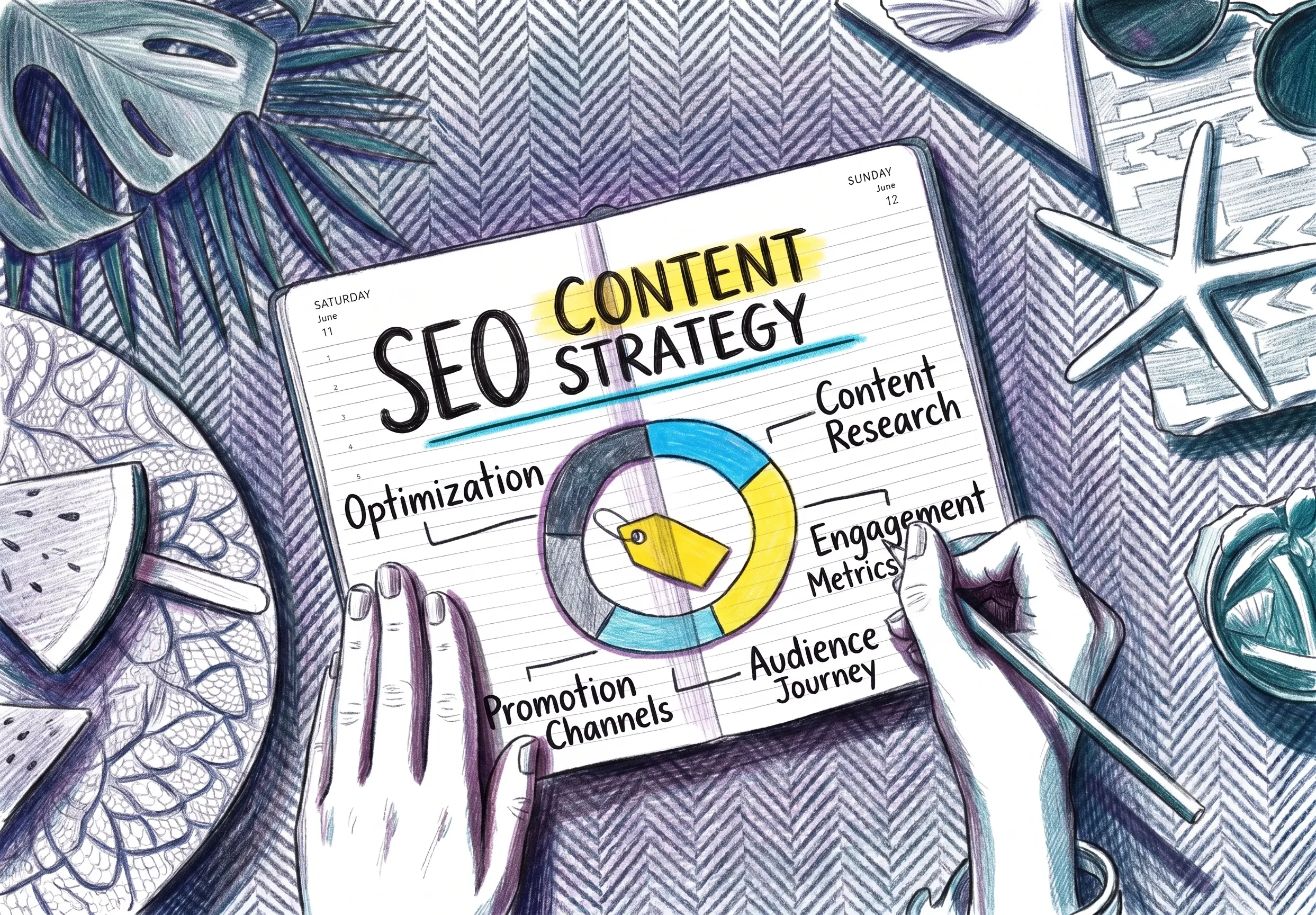
SEO (Search Engine Optimization) content writing is basically writing on a topic –backed by strategy. With logical hierarchy heading tags, and the content in-aligned to the intent – of not only the target audience, but the keyword itself’ – your post can now have the potential to be effortlessly crawled and evaluated by the search engine – placing it at top with the ‘next step’ guidance.
Unlike paid advertising, where you pay and gain traction, SEO is an organic approach, which, if implemented correctly, has the potential to bring in long-term sustainable results. Remember, SEO content writing is an aspect of the clustered digital strategies’ which serves as a foundation. It bridges the gap between technical understanding and human implementation – guiding readers in plain English towards the next step.
Before we move onto the next section, understand this – content writing and seo content writing are interrelated.
- If you’re writing a post – maybe on, let’s say ‘best ways to respond to sarcasm’ – you may write a perfectly good, customised post with ideas for dominating such conversations. But, if it’s not made SEO-friendly – without logical heading tags, keywords usage, queries and tangible guidance – your post will not get discovered by the engines – leading to a very little/few to no readers – no matter how good your post is.
Wondering how you’re doing with your content? Book an audit with IntentHarbor today.
Why SEO Content Writing Matters More Than Ever in 2026
2026 is the year of automation capitalisation and psychographic discovery, where no matter whether you’re an owner, marketing manager, or a consumer – content is ..and will be the most dominant and largest part of your life. (Acc to statista.com)
Even with the automation, your content ( in any format) has to be structured as per the guidelines of the platform to reap the benefits. While tools like Claude and Canva can help with some aspects of content generation – your understanding of the psychographic traits and needs of your target audience is what will truly differentiate your content from the rest. Here, SEO will continue to matter – giving you guidelines on how to approach a topic.
- Keyword research
- Intent bifurcation
- Competitor analysis
- Targeted customer persona
- Content Outline
- On-page Optimisation
- Off-page link building activity
- Updates & refresh to ensure relevancy.
Even with the presumptions of ‘SEO is dead’, ‘Do not do SEO, instead do AEO and GEO’ SEO will continue to matter – and SEO optimized content will be the pivotal step. Remember, AI and automation tools extract data/information from such searches – and not out of thin air. Your content can only be visible when its SEO-optimised & targeted-persona aligned. This is why SEO in 2026 matters more than ever in your writings & content creation.
How SEO Content Writing Supports Business Growth
Let us look at how an optimally optimised content can support business growth:
- Reduction in the CAC (Customer Acquisition Cost)
Your content & digital assets amplify over time when done rightly. Unlike paid advertising that lets you bid and gain traffic only when you pay; SEO is organic, meaning you gain traction in-exchange for an insightfully-well-written, optimised digital content. This when inter-linked creates a cluster web which effortlessly navigates the users to different intent pages/ posts – driving actions such as enquiries and leads. Over time, this compounding organic traffic lowers your overall CAC and yields higher ROI (Return on Investment)
- Establishing Authority and Trust
When you keep on writing on technical concepts and user-generated queries, and provide expertise/opinions in what-if scenarios, you ignite the EEAT signals ( used by search engines to establish domain authority). EEAT is nothing but a parameter set by Google and adopted by other engines – which signals the crawlers that this account has experience, expertise and authoritativeness – in-turn is commendable & a trusted body.
Your website can now start ranking in top 20 – helping the users as well as you with your primary and secondary goals.
- Build Audience Segmentation
It is not necessary that whoever is reading this blog is going to contact IntentHarbor for their content creation needs. There will be audiences who are here to just read, research & get to know how content writing & optimisation has evolved in 2026.
SEO strategisation helps build paid and organic audience segments who can then be targeted with custom-transitional driven content at the right time. In addition to this, it also helps build brand trust and authority by assuring that we understand them and hence we can help.
- Lead Generation
Another known outcome of SEO strategisation for businesses is lead generation. While this equally depends on integrated marketing tactics; at its core, a well optimised content serves as a bridge between brand visibility and query resolution. By aligning your SEO content with specific search intent, you attract visitors who already have a problem your business solves. This means your sales and marketing team can spend less time chasing cold leads and more time closing prospects.
Before You Write: Understand Search Intent, Not Just Keywords
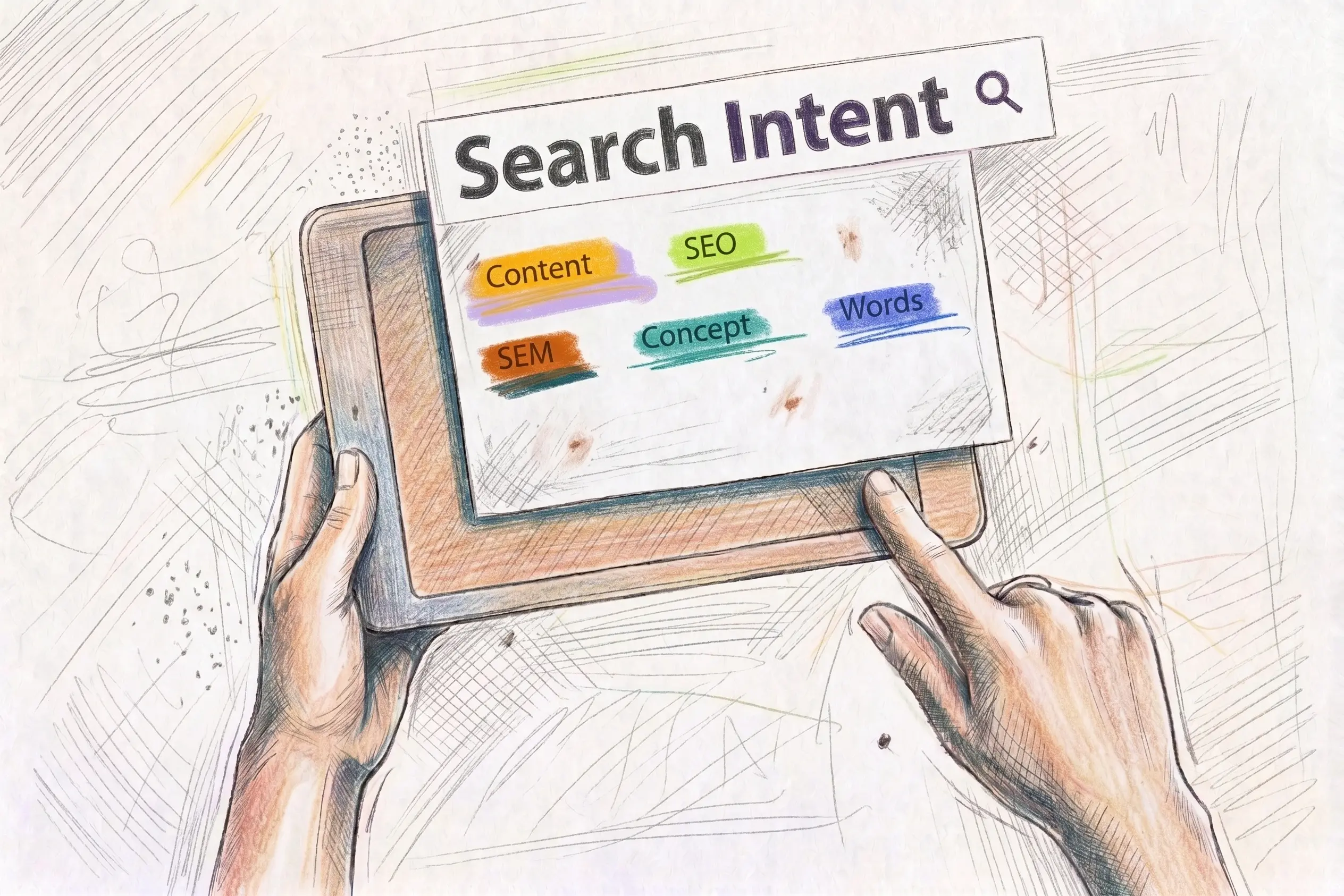
You begin the writing journey by first understanding the intent of the reader and the audience.
One of the biggest misconceptions about SEO content writing centers on the false premise that finding keywords is the initial victory. In truth, the process commences far sooner—by deciphering the psychographic motivations behind the query.
Each query represents a need – waiting to be answered or solved. For example: when you consider the keyword ‘seo content writing’. The intent of the reader and target audiences differ:
- A business owner may want to know whether investing in SEO content is worthwhile.
- A marketing manager might be looking for a repeatable content strategy.
- A startup founder may be evaluating whether organic content can reduce customer acquisition costs.
- A student or freelance writer may simply want to understand what SEO content writing is and how it differs from traditional content writing.
The keyword remains the same, but the intent behind each search is different.
This is why modern SEO is no longer about matching keywords alone. It’s about creating content that satisfies the reason behind the search. Be it commercial, transactional, informational or navigational – a single keyword can have more than one intent – and you need to clearly know and define the intent before you start writing.
How to Write SEO Content That Ranks and Helps People
Writing content that ranks and helps people requires a comprehensive approach – where you balance technical mastery with human understanding ( including their pain points, needs, goals and how they can achieve it). Follow the below steps to write content that can rank and help people at the same time:
Step 1: Understand the Audience
The first step towards any strategisation is to understand the need behind it, who are its target audience, what are their goals and pain points, and what they are looking for. When you complete this step thoroughly, you can then only move onto the next step.
Step 2: Research Keywords and Intent
Based on the ICP, start with the keyword research closely matching the primary intent. For example, if my target audience were SMEs looking for accountants in India, I would then do research and get a commercial intent keyword ‘top accountants in India’ as my primary keyword alongside transitional intent keywords to support them. Remember, focus should be on relevance and not just volume.
Not knowing which keywords to use or finalise for your business? IntentHarbor can help
Step 3: Plan the Structure
Create your content outline with logical hierarchy heading tags (H1, H2, H3) – each one different from the rest, yet working together to fulfill intent delivery. Write down your meta data, slug and FAQs- you are going to target for the PAA (People Also Ask) section. Also define what schema combinations you would apply at the end.
Step 4: Write the “AEO-Optimized” Introduction
Ensure you include a separate TL;DR (too long, didn’t read) section, or frame your introduction to answer the intent in the first few lines for the AI engines and overviews. Remember, AEO (Answer Engine Optimization) requires fulfilling the search intent behind it – for both the keyword and audience, and not just density optimizing it.
Step 5: Write for People First
Your article/blog posts should be written for the people.
Gone are the days when writing and ranking was all about fulfilling the criterias of the algorithm. Now, with AI advancement and shift in search and content consumption — you need to write your content for the people, including examples for understandability and usefulness – while keeping it simple, clear and logical.
Step 6: Prove Your E-E-A-T
Both search and AI engines now require you to – write from experience using first-person pronouns, where relevant. Ex: “In our testing we found….. Or when i managed this project last year…..” instead of detached, passive phrasing.
You also need to cite your sources by linking to authoritative bodies/websites to show the crawlers that your information is backed by data. Experience, Expertise, Authoritativeness and Trustworthiness is the ongoing, evolving parameter used by both the traditional and AI engines – to determine your viability.
Another way to strengthen your EEAT is by adding Author Bio, Review schema where applicable, and lead magnets.
Step 7: Review & Improve
Just like how life demands improvement over a course, your content also demands update and improvement to maintain its relevancy. Ensure to review your copy, and revise it with updates, new technical requirements and upcoming changes predictions.
The Essential Elements of High-Quality SEO Content
When we speak about high-quality content, it’s not just restricted to its word count and keywords usage. A viable high-quality content copy is something which answers different intent of different users in simple manner, retaining touch of technicality required – at the same time ensuring primary intent is being delivered uncompromised.
If I were to say that I am writing a high quality content on “seo content writing keyword’ (which I am!), certain criteria that will justify my opinion are:
- Having a clear introduction that is AI friendly as well.
- Maintaining originality & fresh perspective, and including industry examples where relevant.
- Logical heading hierarchy – ensuring intent is not duplicated multiple times – even semantically.
- Analysing the keywords researched against the intent, and avoiding going all-in with the keywords list (because different keywords have different sets of intent, and not all goes towards your primary goal).
- Ensuring keywords are used naturally. Exact match where relevant and required like in the H1 tag.
- Mapping internal linking strategy to provide genuine value.
- Adding stats or quoting authoritative sites.
- Image to be formatted to WebP format & alt text to be added to all.
- Ensuring the readability is high – with optimal length paras, bullet pointers, infographics & video where required.
- Ensuring the blog is infused with practical steps, a solid conclusion and FAQs.
- Ensuring the author bio included has necessary accreditations and social links.
All these elements combine to produce high quality SEO content – which ultimately ranks at the top. Your copy has to distinguish from the crowd by providing actionable steps & how you or your profile is going to add value.
Common SEO Content Writing Mistakes to Avoid
- Fixating on keyword density percentage and exact keyword usage.
- Overly technical optimization tactics. One example is : adding multiple schemas. A blog post can have two schemas – faq schema, article schema. But adding even a ‘how to’, for a non-step post, or ‘review schema’ for a purely informational post is misleading, and even penalised by search engines like Google.
- Writing only for algorithms—and not humans. Writing overly technical, keyword-dense posts with no examples compromises readability and relatability. At the same time, avoid over-optimising by adding examples for every pointer or context when a direct explanation is sufficient.
- Ignoring search intent. Your copy should naturally and very seamlessly balance the intent of the keyword to that of the need of the audience.
- For example: since I am targeting business owners, managers, and startup founders as my primary audience, the keywords used like “seo content writing, content writing, schema….” should be relevant, and not overly complicated. This means, I should provide practical, simple examples on its best practices and mistakes to avoid without overcomplicating it with technical jargons.
If I still want to include certain technical or in-depth context, I can create a separate supporting post and link to it internally from this blog. This ensures each blog serves its intended purpose fully without becoming overpopulated with information.
- For example: since I am targeting business owners, managers, and startup founders as my primary audience, the keywords used like “seo content writing, content writing, schema….” should be relevant, and not overly complicated. This means, I should provide practical, simple examples on its best practices and mistakes to avoid without overcomplicating it with technical jargons.
- Another mistake is publishing thin content with no customisation, depth and insight.
- Last but not least – overusing AI without editing with weak introduction and little to no internal linking strategy.
These are some of the prevalent mistakes in SEO content writing that needs to be looked at before submitting your final draft.
SEO Content Writing and AI: Can They Work Together?
The short, AEO optimised answer is yes. Then can work together only when each is used for what it does best.
Not using AI in 2026 will prove to be a costly mistake businesses can’t afford. You can…. and should use AI for research, analysis, in-depth reasoning & understanding, summarisation, organizing outlines and speeding up repetitive tasks. This will improve the efficiency. NOW, here’s where some businesses go off course: they confuse efficiency with expertise.
AI will not understand your customers the way you do. It doesn’t have firsthand, personalised experience of running the business, interacting with clients or solving industry-specific challenges (unless fed with the same problem). While it can predict based on patterns, it cannot fully replace genuine experience, judgement and human empathy.
This is why the most effective SEO content today – isn’t created by AI or without AI—it’s created with AI, guided by human expertise. The balance of it strengthens the EEAT signals, ultimately satisfying user intent and providing genuine value. Remember to add original human insights, examples and practical business context – which AI cannot generate, let alone replicate.
SEO Content Writing vs Copywriting vs Content Writing
While we are in the midst of completing the intent delivery of this search term for our audience, let us delve into the above terms often used interchangeably and sometimes wrongly — content writing, copywriting, content writing.
Understanding the distinction helps businesses choose the right approach for the right objective. Let us understand them briefly.
| Aspect | SEO Content Writing | Copywriting | Content Writing |
| Primary Goal | Improve organic visibility while educating readers | Encourage immediate action or conversion | Inform, educate, or entertain an audience |
| Typical Formats | Blog posts, service pages, pillar pages, guides | Landing pages, advertisements, email campaigns, product pages | Articles, newsletters, website pages, case studies |
| Focus | Search intent, discoverability, long-term traffic | Persuasion and conversions | Communication and audience engagement |
| Success Measured By | Organic traffic, rankings, engagement, enquiries | Clicks, conversions, sales | Readability, engagement, brand awareness |
The strongest digital strategies rarely rely on just one of these disciplines. Instead, they combine them thoughtfully to support different stages of the customer journey.
Should You Write SEO Content Yourself or Hire an Expert?
There is no one answer to this question. The best choice depends on your goals, available time, and internal expertise.
If you’re a small business owner with a good understanding of your industry, writing your own content can be an excellent way to build authenticity. No one understands your customers’ questions better than you do.
However, writing consistently is only one part of effective SEO content.
Successful content also requires:
- Understanding search intent.
- Conducting keyword and competitor research.
- Planning content strategically.
- Structuring articles for readability and search.
- Optimizing on-page SEO elements.
- Updating content as search behaviour evolves.
As your business grows, balancing these responsibilities alongside daily operations becomes increasingly challenging.
That’s when working with an experienced SEO content writer or strategist can provide significant value.
An expert doesn’t simply write articles—they help ensure every piece of content supports your broader business objectives, strengthens your topical authority, and contributes to sustainable organic growth.
So, if you’re also caught in this tangle and unsure whether to write yourself, or hire an expert, answer the below questions without bias.
- Are you able to consistently deliver high quality and optimised content
- Will you be able to manage upcoming responsibilities without interfering with your content calendar
- Are your goals being achieved?
- Does your business require more than just content writing? And whether you’re at a stage where other forms of writing & digital strategies are required.
- Does your time allotted to writing justify the ROI?
Ultimately, the goal isn’t simply to publish more content. It’s to publish content that answers meaningful questions, builds trust, and supports measurable business growth.
Conclusion
SEO content writing has evolved significantly in recent years, with AI usage and automation now becoming a standard for a quality output. Your content has to be SEO and AI optimised, with EEAT principle-backing across all stages.
Even with the advancement, fundamental SEO when rightfully implemented will lead the pathway to your AI visibility, thereby gaining traction across both traditional and AI engines.
At IntentHarbor, we believe that meaningful growth happens when thoughtful communication meets strategic execution. Technology can support that journey, but lasting results are built through human understanding, continuous learning, and content created with genuine purpose.
If there’s one takeaway from this guide, let it be this:
Keywords may help people discover your content. Understanding people is what makes that content worth discovering.
People Also Ask
What is SEO content writing?
SEO content writing is the process of creating content that helps people find answers while making it easier for search engines to understand and rank that content. Its primary goal is to improve organic visibility while educating readers.
Is SEO content writing still worth it?
Yes, even with AI advancement and changing priorities to now rank on AI platforms, good SEO content is the fundamental anchor that feeds in the AI results & predictions.
How long should SEO content be?
It depends on the search intent, user need and value provision. Ideal length can be anywhere from 1500 words to 3000+ word content.
How many keywords should I use?
There isn’t a fixed number. Focus on using your primary keyword naturally where it’s relevant, and support it with related terms that fit the context.
Can AI write SEO content?
AI can assist you with in-depth comprehensive research, analysis and summarization. Writing is what you do – adding practical business context, examples and expertise to give direction to the content.
How long does SEO content take to rank?
SEO is a long-term strategy, so results vary depending on your industry, competition, website authority, and content quality. While some pages may gain visibility within a few weeks, meaningful and sustainable growth often takes several months of consistent effort.
How often should businesses publish blogs?
Ideally, you should publish a minimum 2 blogs a week – which totals to 8 blogs a month. But, this number varies depending on your niche, goal & user’s search intent.
What’s the difference between SEO content writing and regular content writing?
SEO content writing is strategically focused on improving organic visibility and helping search engines and users understand your content. Regular writing on the other hand is primarily concerned with providing clear communication and engagement.